I. Main Cleaning Processes
1. Ultrasonic Cleaning Technology (Recommended for precision cleaning)
- Working Principle: Utilizes "cavitation effect" generated by ultrasonic waves in the cleaning fluid, creating micro-bubble implosions that produce high-pressure shock waves to thoroughly remove surface and internal channel contaminants
- Applicable Frequencies:
- 28kHz: Suitable for large castings, removing stubborn carbon deposits and metal chips
- 40kHz: Suitable for medium-precision components such as pistons and valves
2. High-Pressure Water Jet Cleaning (Suitable for rough washing/deburring)
- Pressure up to 400-1000 bar, effectively removes casting residues and burrs
- Combined with brush cleaning: brush first, then high-pressure rinse
3. Integrated Cleaning Process (Industrial production line standard)
III. Equipment Configuration Recommendations
Standard Configuration:
- Cleaning Tank: 304/316L stainless steel material, capacity customized according to workpiece size (commonly 135L-360L)
- Ultrasonic Power: 2400W-7200W (based on production capacity requirements)
- Heating System: Adjustable 20-95°C to accelerate oil decomposition
- Filtration System: Bag filter + oil-water separation device for recycling cleaning fluid
- Lifting System: Hydraulic or pneumatic lifting platform for easy loading/unloading
Automation Options:
- PLC control + touch screen HMI
- Step-type conveyor system
- Robot loading/unloading
- RFID data traceability system
V. Typical Application Scenarios
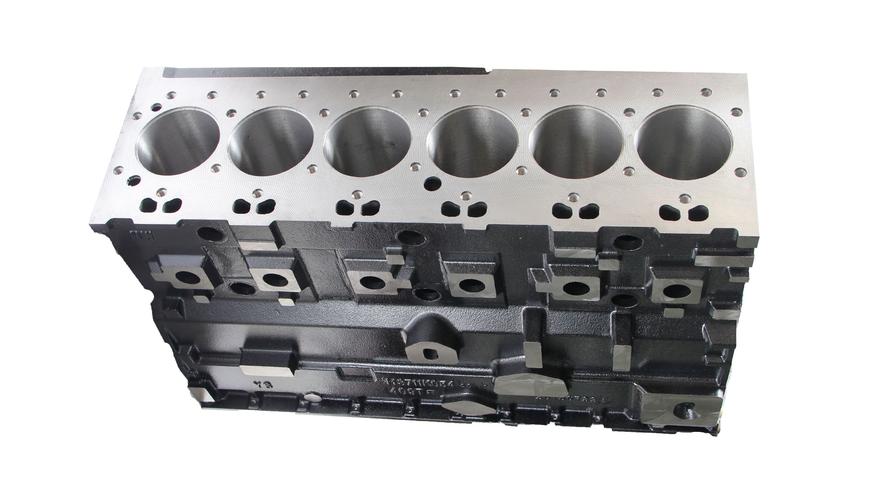
- Engine Overhaul: Remove carbon deposits, sludge, coolant residue
- Remanufacturing Industry: Cleaning of refurbished used parts
- Production Line Integration: Precision cleaning before assembly
- Repair Service Centers: Rapid deep cleaning
VI. Important Notes
- Cleaning Agent Selection: Choose weak alkaline or neutral cleaning agents based on contaminant type to avoid strong corrosion
- Workpiece Loading: Engine blocks should be placed at an angle, avoiding direct contact with tank bottom to ensure uniform ultrasonic action
- Anti-rust Treatment: Anti-rust treatment is required after cleaning to prevent oxidation of aluminum engine blocks
- Regular Maintenance: Replace cleaning fluid promptly and clean metal chips from filters
For detailed solution design based on specific production capacity, workpiece dimensions, or budget, it is recommended to contact professional equipment manufacturers for non-standard customization.