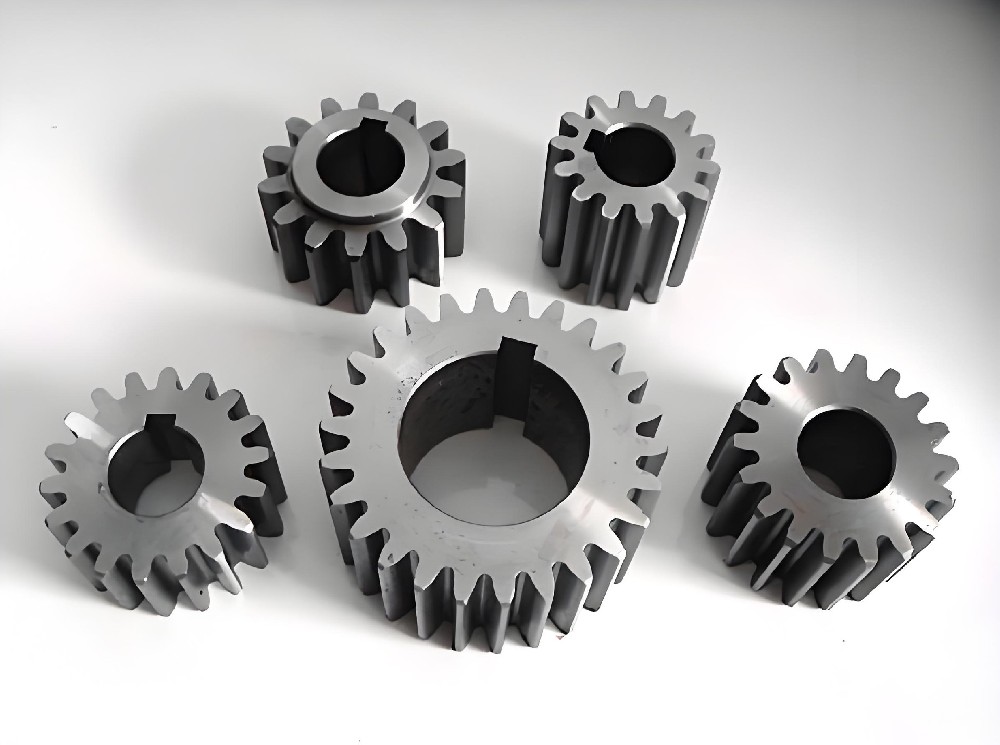
The core process for automotive sprocket cleaning combines hydrocarbon vacuum ultrasonic cleaning, high-pressure spraying and vacuum drying. It complies with the cleanliness standards of VDA 19 / ISO 16232 Class 5–7, leaving no residues on tooth roots, inner holes and blind holes. This solution achieves environmental protection, rust prevention and automated mass production. Below is a fully implementable complete solution, including processes, equipment, technical parameters, inspection criteria and recommended machine models.
1. Cleaning Difficulties and Core Requirements
1.1 Typical Contaminants
1.2 Mandatory Cleanliness Standards for the Automotive Industry
Particles: ≤5 μm, maximum particle size ≤25 μm (VDA 19)
Residual oil: ≤1 mg per piece; no water marks, white spots or rust
Application scope: Transmission sprockets, engine sprockets, timing sprockets and drive sprockets
2. Preferred Process Route (Hydrocarbon Solvent, Mature Solution by Sinobakr)
Fully Enclosed Hydrocarbon Vacuum Cleaning (Eco-friendly & High-precision)
2.1 Process Details (Applicable parameters)
Pre-spraying (Removal of heavy oil stains and iron filings)
Medium: Hydrocarbon solvent (Flash point ≥ 62℃)
Pressure: 3–5 MPa, with 360° rotating nozzles
Duration: 2–3 min; Temperature: 40–50℃
Vacuum Ultrasonic Fine Cleaning (Deep cleaning for tooth roots and blind holes)
Vacuum degree: -0.08 ~ -0.09 MPa (to evacuate air from gaps and facilitate solvent penetration)
Ultrasonic frequency: 40 kHz (main) + 80 kHz (auxiliary), Power: 1.2–1.5 W/cm²
Duration: 8–12 min; Solvent: Modified hydrocarbon (non-corrosive, low VOC)
Vacuum Rinsing (2 cycles to eliminate residues)
Medium: Fresh hydrocarbon solvent; Vacuum degree consistent with fine cleaning
Duration: 3–5 min per cycle; Prevent secondary contamination
Vacuum Drying (Critical for no water marks and rust prevention)
Temperature: 50–60℃; Vacuum degree: -0.09 MPa
Duration: 8–15 min; Oxygen-free environment to avoid oxidation
2.2 Comparison: Hydrocarbon Cleaning vs Water-based Cleaning
Hydrocarbon cleaning: Solvent recovery rate ≥ 95%, zero wastewater discharge, excellent rust resistance and high cleanliness. Suitable for precision parts and export products.
Water-based cleaning: Low operating cost, but prone to causing workpiece rust, requires wastewater treatment and tends to leave residues in blind holes. Suitable for standard ordinary parts.
3. Core Equipment Selection (Sinobakr products for different production capacities)
3.1 Small and Medium Batch Production (500–2000 pieces per day)
Single-chamber Hydrocarbon Vacuum Cleaning Machine
Structure: Single chamber integrating multiple processes of vacuum ultrasonic cleaning, spraying and drying
Advantages: Small footprint (approx. 6 ㎡), flexible product changeover, cleanliness up to Class 6–7
Application: Multi-variety small and medium-batch sprockets, such as timing sprockets and fine-pitch drive sprockets
3.2 Mass Production (3000–10000 pieces per day)
Fully Automatic Multi-tank Hydrocarbon Cleaning Line
Structure: 3–5 tanks (Pre-cleaning → Fine cleaning → Rinsing → Drying), equipped with chain or mesh belt conveyor
Advantages: Cycle time of 15–30 seconds per piece, compatible with robotic handlers, solvent recovery rate ≥ 98%
Application: Transmission sprockets, new energy motor sprockets and powder metallurgy sprockets
3.3 Ultra-high Precision Production (Cleanliness Class 7)
Flexible Precision Cleaning Center
Configuration: CNC positioning, robotic loading and unloading, dual-frequency ultrasonic system and vacuum distillation unit
Advantages: Particle size ≤400 μm, full-process traceability and anti-collision design
Application: High-end automatic transmission sprockets and hybrid power transmission parts