Mobile/WhatsAPP
+8613270982089




The complex structure of hydraulic fittings features threads, micro-holes and blind holes that easily trap oil stains, iron filings and polishing dust. Cleanliness directly determines the service life of complete hydraulic machinery. Equipment selection shall be comprehensively evaluated based on six core dimensions: workpiece working conditions, cleanliness standards, production capacity, cleaning medium processes, automation level, environmental protection and maintenance costs, so as to accurately match vacuum hydrocarbon, modified alcohol, vacuum ultrasonic and water-based cleaning equipment.
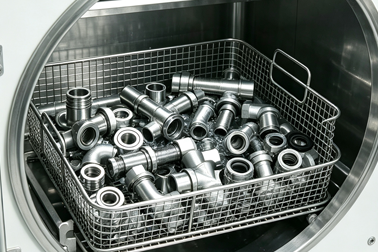
Cleanliness standards serve as the primary basis for model selection. Different hydraulic products correspond to different equipment solutions:
High-pressure precision hydraulic fittings for aerospace and servo systems (NAS 5~NAS 6 Class)Vacuum hydrocarbon ultrasonic cleaning machines are mandatory. Hydrocarbon solvents deliver strong dissolving power for cutting oil and drawing oil. Combined with vacuum sealing and ultrasonic cavitation, they penetrate micron-scale threaded micro-holes. Equipped with low-temperature vacuum drying, they leave no water stains or oxidation and consistently meet high-end precision cleanliness standards. The built-in solvent distillation and recovery system ensures stable cleanliness consistency during long-term mass production.
Hydraulic fittings for general construction machinery and low-pressure applications (NAS 7~NAS 8 Class)Modified alcohol vacuum cleaning machines are preferred. Modified alcohol removes both mineral oil and water-soluble cutting fluid simultaneously with a high flash point, requiring lower explosion-proof investment and no complex explosion-proof workshops, thus reducing plant renovation costs for medium and small batches of general hydraulic fittings.
Low-end general fittings and rough-machined workpieces (NAS Class 9 and below)Ordinary water-based spray or ultrasonic cleaning machines are available at low procurement costs, yet with obvious drawbacks: water residues easily remain in deep holes and threads, causing rust on parts. Supporting drying and wastewater treatment equipment is required, making them unsuitable for precision assembly of high-pressure hydraulic components.
Single mineral oil, stamping grease and drawing oil (pure oily contaminants)Vacuum hydrocarbon cleaning equipment is recommended. The like-dissolves-like principle achieves thorough degreasing without residues, compatible with steel, stainless steel and all metal hydraulic fittings.
Mixed oil stains, water-soluble cutting fluid, polishing paste and dustModified alcohol vacuum cleaning machines are ideal, capable of cleaning both polar and non-polar contaminants. One machine accommodates multi-process workpieces without frequent solvent replacement during product changeovers.
Only light surface dust without heavy oil contaminationSimple water-based ultrasonic cleaning equipment meets demands at the lowest cost, but is not recommended for precision hydraulic assembly processes.
Key structural assessmentDeep blind holes, fine internal threads and crossed oil passages are common in hydraulic fittings. Open single-tank cleaning machines are prohibited. Equipment must adopt fully vacuum-sealed design integrating directional spraying and ultrasonic composite processes to eliminate cleaning dead zones. Roller cleaning chambers can be customized for long pipeline hydraulic fittings to realize 360° all-round flushing of bulk workpieces.
Model selection based on production takt
Small batch (daily output < 500 pieces): Single-tank vacuum ultrasonic cleaning machine with small footprint and flexible operation
Medium batch (500–5,000 pieces per day): Multi-station linked vacuum cleaning machine with separate stations for washing, rinsing and drying for continuous operation
Mass automated production line (daily output over 5,000 pieces): Fully automatic closed-loop cleaning line connectable with manipulators and conveyor lines to achieve unmanned loading and unloading and greatly cut labor costs
Matching tank volume by loading weight per basketReserve 20% extra volume according to the single loading weight of material frames to avoid workpiece stacking blocking threads and micro-holes and impairing cleaning effects.
Manual / semi-automatic models: Suitable for enterprises with fluctuating orders, small-batch sample testing and frequent specification changeovers, featuring flexible operation and lower investment.
Fully automatic PLC intelligent models: Designed for standardized mass production and digital workshop management. They support connection with MES and automated assembly lines, and automatically record cleaning duration, temperature and cleanliness data to meet traceability requirements of auto parts and military industries.
Optional extended configurations: Online particle detection, vacuum distillation recovery and oil-water separation modules are recommended for high-end hydraulic fittings to guarantee stable long-term production.
Vacuum Hydrocarbon Cleaning MachineAdvantages: Solvent recovery rate ≥95%, nearly no waste liquid discharge and low consumable loss.Disadvantages: Relatively low solvent flash point, requiring explosion-proof and ventilation facilities in workshops with higher initial procurement costs.
Modified Alcohol Vacuum Cleaning MachineAdvantages: High flash point, low VOC, low explosion-proof renovation investment, compliant with factory environmental regulations and biodegradable.Disadvantages: Slightly weaker cleaning performance on heavy drawing oil compared with hydrocarbon solvents.
Water-based Cleaning MachineAdvantages: Low equipment cost with no explosion-proof requirements.Disadvantages: Generates massive wastewater with supporting sewage treatment equipment mandatory; aluminum hydraulic fittings prone to oxidation and rust, leading to higher comprehensive long-term maintenance costs.
Prioritize manufacturers offering free cleaning process sampling to test actual cleaning performance of fittings and verify compliance with NAS standards.
Equipment shall obtain CE and ISO9001 certifications with a minimum 2-year whole-machine warranty and local after-sales response within 72 hours.
Select suppliers providing integrated services including dedicated cleaning agents, filter consumables and process solutions to avoid difficulties in later consumable procurement and process commissioning.
High-pressure/aerospace precision hydraulic fittings, heavy oil contamination, NAS Class 6 high standards → Vacuum Hydrocarbon Ultrasonic Cleaning Machine
Mixed multiple contaminants, limited workshop explosion-proof conditions, medium and low-volume mass fittings → Modified Alcohol Vacuum Cleaning Machine
Low-standard rough-machined fittings, limited budget, only surface light contamination removal → Water-based Ultrasonic Cleaning Machine
Mass assembly line production → Fully automatic multi-station vacuum closed-loop cleaning line